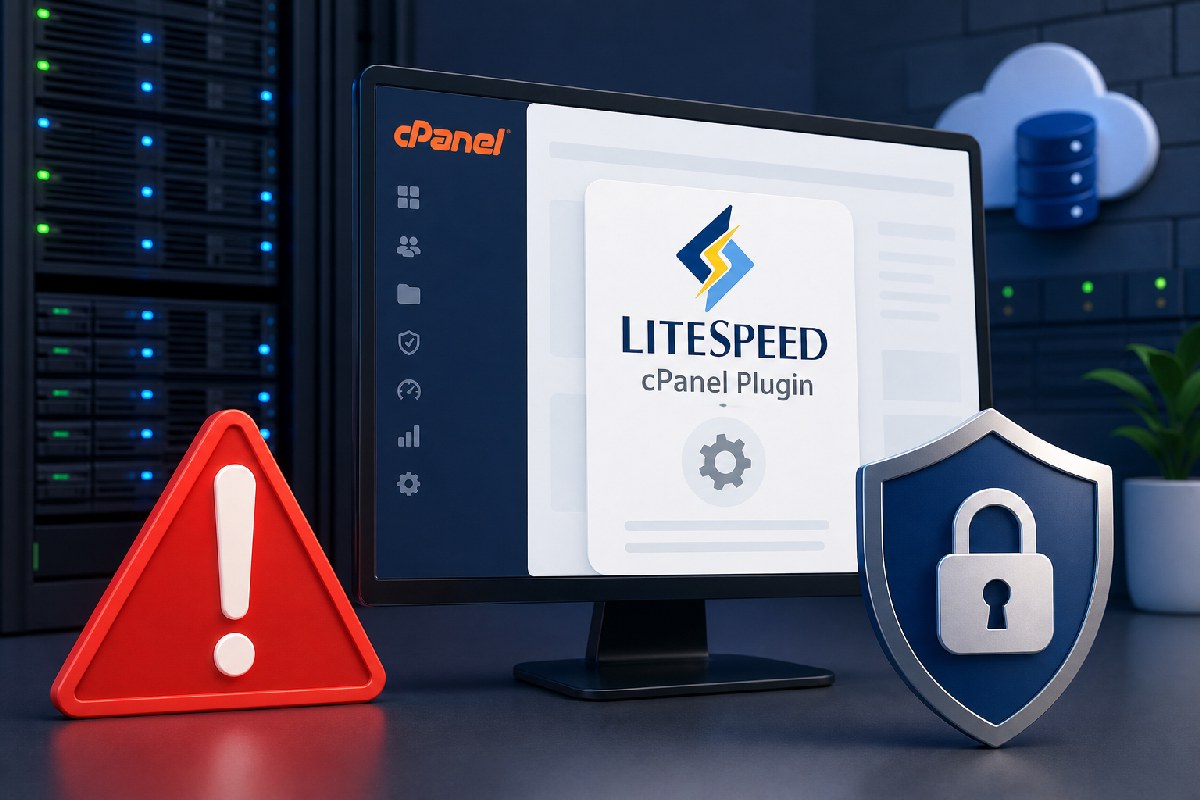
A vulnerability tracked as CVE-2026-54420 affects LiteSpeed’s cPanel user-end plugin and has been added to CISA’s Known Exploited Vulnerabilities (KEV) catalog. Reports indicate active exploitation, and U.S. federal agencies were instructed to act within a short window under BOD 26-04. For shared hosting environments that rely on CloudLinux/CageFS, this issue deserves prompt attention.
Why it matters: on multi-tenant servers, a flaw that enables privilege escalation can turn a single compromised or malicious account into full system control. CVE-2026-54420 hinges on how the plugin handled symbolic links on systems where a user already has FTP or web shell access, which is common on shared hosting.
What the sources confirm
According to the National Vulnerability Database entry, the LiteSpeed cPanel plugin before version 2.4.8 (as distributed in the LiteSpeed WHM plugin before 5.3.2.0) mishandled user-supplied symlinks in CloudLinux/CageFS shared hosting environments, with exploitation observed in May 2026. LiteSpeed’s own advisory explains that this behavior can allow a user with FTP or web shell access to escalate privileges to root on affected shared servers and states that the issue is being actively exploited.
LiteSpeed released updates addressing the problem in early June 2026, noting cPanel plugin v2.4.8 and a corresponding WHM plugin release. Their post urges administrators to upgrade to the latest available versions and, if an immediate upgrade is not possible, indicates a temporary path to remove the user-end plugin until updates can be applied.
BleepingComputer reports that CISA added CVE-2026-54420 to the KEV catalog and directed federal agencies to remediate within three days under Binding Operational Directive 26-04. KEV inclusion is a strong signal that exploitation has been observed and that patching should be prioritized for internet-exposed assets.
References:
- NVD record: https://nvd.nist.gov/vuln/detail/CVE-2026-54420
- LiteSpeed advisory: https://blog.litespeedtech.com/2026/06/01/security-update-for-litespeed-cpanel-plugin-2/
- CISA/coverage: https://www.bleepingcomputer.com/news/security/cisa-warns-of-another-actively-exploited-cpanel-plugin-flaw/
Practical impact and context
This is not an unauthenticated remote attack. The risk centers on accounts that already have FTP or web shell access on a shared server. In those multi-tenant scenarios—common for hosting providers—the flaw raises the stakes because a single user account could gain root-level control if the vulnerable plugin is present and unpatched.
LiteSpeed’s post also shares helpful signals for defenders investigating possible abuse. They point to unusual sequences and concurrency in plugin-related requests—for example, an unexpected pairing of internal actions and a burst of near-simultaneous calls from the same source IP. LiteSpeed cautions that such checks can produce false positives and recommends reviewing server logs to validate findings and assess any impact.
Recommended steps based on the advisories
- Update the LiteSpeed cPanel user-end plugin to version 2.4.8 or later.
- Update the LiteSpeed WHM plugin to the latest release that bundles the fixed cPanel plugin. LiteSpeed mentions a 5.3.2.1 release accompanying the cPanel 2.4.8 fix. The NVD entry references distributions before 5.3.2.0 as affected. If in doubt, move to the newest available version.
- If immediate upgrading is not possible, LiteSpeed notes you can temporarily remove the cPanel user-end plugin to avoid exposure, then reinstall after updating the WHM plugin.
- Review server logs for suspicious patterns highlighted by LiteSpeed’s guidance and investigate any anomalies to determine if further response is needed.
Caveats and what remains unclear
- Source materials differ slightly on WHM plugin version numbering around the fix (NVD references distributions before 5.3.2.0; LiteSpeed notes a 5.3.2.1 release with the patch). In practice, upgrading to the newest available version is the safest path.
- Public advisories confirm exploitation but do not share deeper technical details beyond high-level indicators and affected configurations. Administrators should rely on vendor guidance and their own logs for confirmation and scoping.
Bottom line
If you manage shared hosting on CloudLinux/CageFS with LiteSpeed’s cPanel user-end plugin, treat CVE-2026-54420 as a priority. Update the cPanel plugin to 2.4.8 or later and ensure the WHM plugin is on the latest release that includes the fix. Use LiteSpeed’s indicators to triage potential abuse, and apply KEV-driven patching urgency where applicable.

Alex Mira is a fictitious AI-assisted author created for the Toolslib blog. Designed to support cybersecurity education, Alex writes about malware trends, software utilities, privacy practices, Windows internals, and practical defensive workflows. Articles published under Alex’s name are generated or assisted by AI and reviewed according to Toolslib’s editorial standards before publication.
Stay Updated with ToolsLib! 🚀
Join our community to receive the latest cybersecurity tips, software updates, and exclusive insights straight to your inbox!